Know if a text or email is a scam before you click
It points out the fake urgency, the odd link and the gift card request, then tells you who to really call.
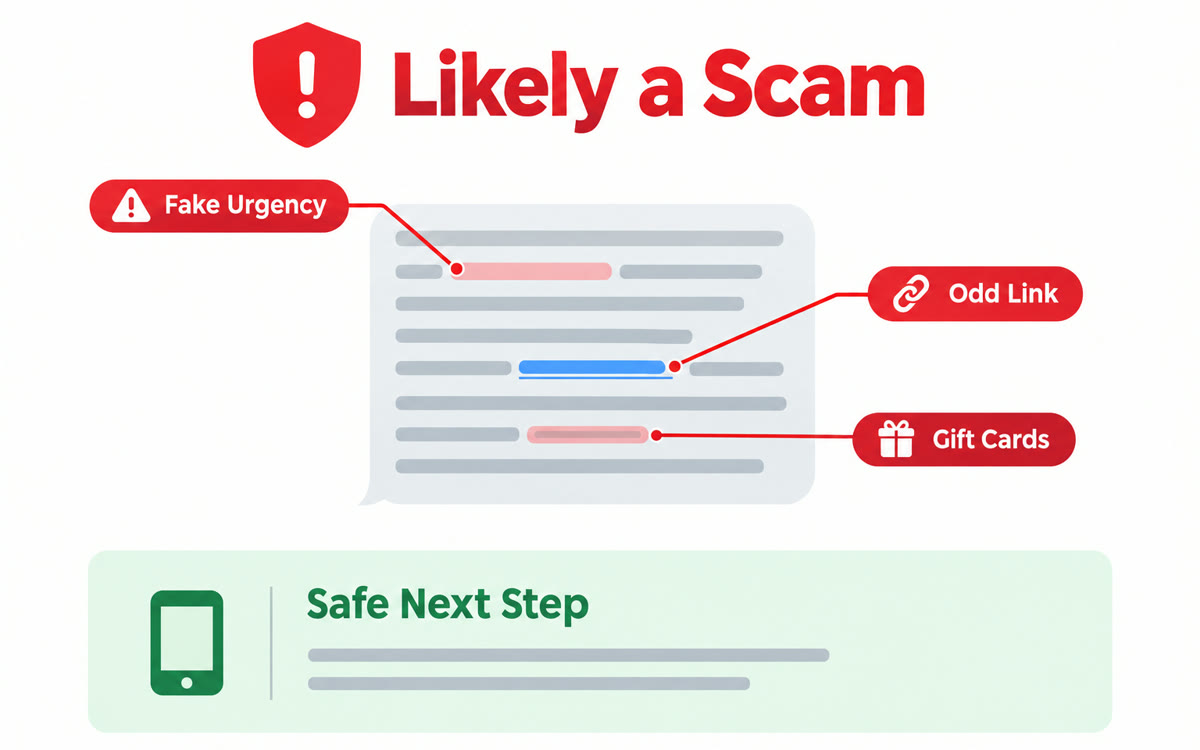
A sample of what you get back, made with AI.
Your prompt
Fill in your details. Skip any you like.
ChatGPT and Claude open with your prompt already typed in. Gemini can't be filled in from a link, so its button copies your prompt: paste it into the new chat.
The prompt that gets copied
I got this [MESSAGE TYPE, e.g. text, email or voicemail] and I'm not sure it's real: [PASTE MESSAGE OR ATTACH SCREENSHOT]. It claims to be from [WHO IT CLAIMS TO BE, e.g. my bank].

How likely is it that this is a scam, and why? Use plain words for someone who isn't technical. List every warning sign you see (urgency, threats, odd links or sender, requests for money, gift cards, codes or passwords). Spell out my safest next step and what I should avoid. Explain how to check it safely using the company's official app, website or the number on my card, never the contact details in the message. If it looks real, still tell me how to confirm it.
Paste a strange message or upload a screenshot and get the warning signs explained in simple terms, plus a safe way to check it with the real company.
Step by step
- Leave every link and phone number in the message alone.
- Screenshot it or copy the text into ChatGPT, Claude or Gemini.
- Paste the prompt and read the warning signs it finds.
- Contact the company through its official app, website or the number on your card.
What you'll get
A simple verdict, every warning sign spelled out and safe next steps for checking with the real company.
AI can spot warning signs but can't promise a message is safe. Always verify through official channels.
- Made for
- Everyone
- Works in
- ChatGPT, Claude, Gemini