Key takeaways
- Claude Code is the desktop app, not a terminal. You point it at an engagement folder of your own notes and data and type in plain English, no code.
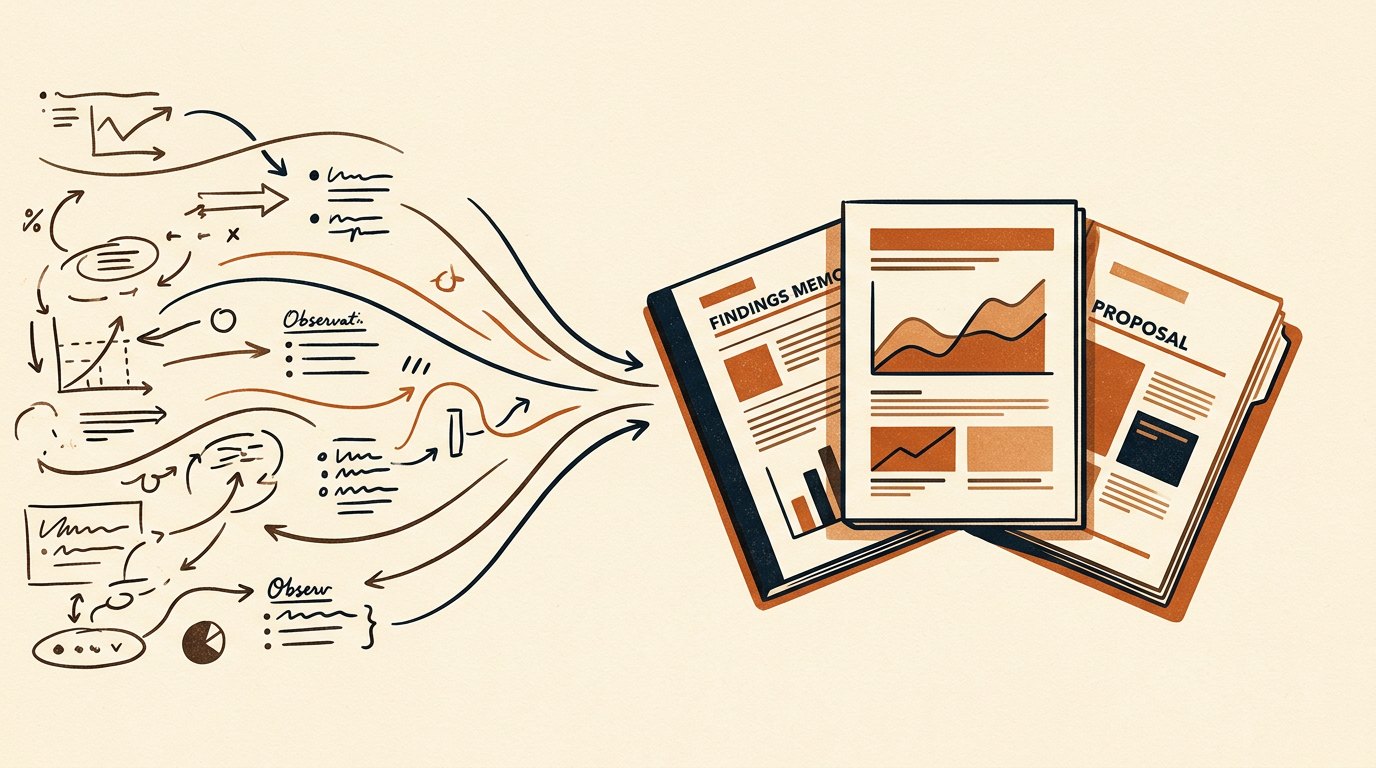
- One source, many deliverables. The same interviews and data become a synthesis, a diagnosis memo, a recommendations deck, and a proposal, all on the client's brand.
- It removes the write-up grind, not the thinking. Discovery, diagnosis, and judgment stay yours. The deck-building and proposal-from-scratch are what it takes off your plate.
- It scales across engagements. Lock your brand and deliverable shapes once, and the second engagement is a copy-paste, not a rebuild.
- Client data stays safe with 3 habits: one folder per engagement, keep truly sensitive material offline, and review before anything leaves.
- Brand match is the point. Set the client's colors and your deliverable format once, lock it, and every deck looks like your firm made it, never generic AI.
The Solo Creators AI Studio
Get this skill, and every one I build.
The whole vaultA new drop monthlyBuild live with meYours to keep, forever
See inside the AI Studio
30-day money-back guarantee. Cancel anytime.
Questions people ask
Do I need to code to use Claude Code as a consultant?
Not at all. Despite the name, Claude Code is the Claude desktop app for Mac and PC: install it like any program, open it, and describe the deliverable you need in plain English. A terminal never enters the picture. What it rewards is what a good analyst rewards, clear instructions and a well-stocked engagement folder, and the judgment stays yours.
What can it actually produce for an engagement?
One folder of discovery material yields the whole delivery chain: a synthesis of your interview transcripts, a findings memo shaped by your framework, a recommendations deck on the client's brand, a proposal or scope of work built from your standard terms, plus the executive summary and close-out email. Each one lands as a draft for your review, never as a final.
Will the deliverables match the client's brand, or look like generic AI?
They match, provided you do the 1-time setup: hand it the client's colors and logo plus your deliverable format, approve a sample, and lock it. The generic-AI look comes from feeding it nothing but a topic. A deck built from real interview data, your framework, and a locked brand reads as your firm's work, because it is.
Is it safe with sensitive client data?
Yes, with the same habits you already apply to any cloud tool you trust with client work. Keep 1 folder per engagement so nothing bleeds between clients, hold genuinely sensitive material offline while the app handles the shareable analysis, and read everything before it goes out. Those 3 habits cover almost all of the practical risk.
How does it scale when I run several engagements?
The setup is the expensive part, and you pay it once. After the first engagement locks your brand, memo structure, deck layout, and proposal format, every later engagement inherits them and starts studio-quality. The effect compounds too: with more engagements behind it, it leans on your past frameworks and phrasings, and each new draft arrives sounding more like you.
Does it replace my deck tool and proposal software?
It takes over the drafting and design layer: the synthesis, the memo, the deck, and the proposal draft all come from one source, which removes the rebuild tax when you produce full deliverables every engagement. The judgment and the client relationship stay untouched. If your deck work amounts to tweaking 1 slide now and then, a dedicated deck tool still earns its place.
How is this different from hiring a junior analyst to do the write-ups?
A junior brings actual judgment, and for some firms the day-rate earns its keep. For pure drafting and formatting, though, Claude Code turns your engagement folder into a consistent first draft in minutes, needs no briefing or management, and is awake at 11pm before the deadline. The review and the judgment stay with you, and that is the part clients pay for.
Which deliverable should a consultant automate first?
Whichever artifact you dread most, since dread marks where the payback is highest. For most consultants that means the recommendations deck (maximum drudgery, maximum visibility) or the proposal, where procrastination costs follow-on revenue. Pick the one costing you the most hours or the most money, run it alone until it feels routine, and only then widen the automation.

Written by Ronnie Nijmeh
Ronnie spent 18 years building a SaaS with a team of 20 that served over 650,000 customers, generated over $14M in sales, and sent over 550M emails. Now he's solo, solving real business bottlenecks and turning them into working AI skills, workflows, and automations. He teaches all of it, with direct access to him, inside the Solo Creators AI Studio Skool community. See what he's built →
“I completely rebuilt my site using the Website Launch Builder. If you've ever built a website, you'll really appreciate this skill. I'm blessed to be a member.”
 Michael HattawayFounder, Iron Strengthens Iron