Key takeaways
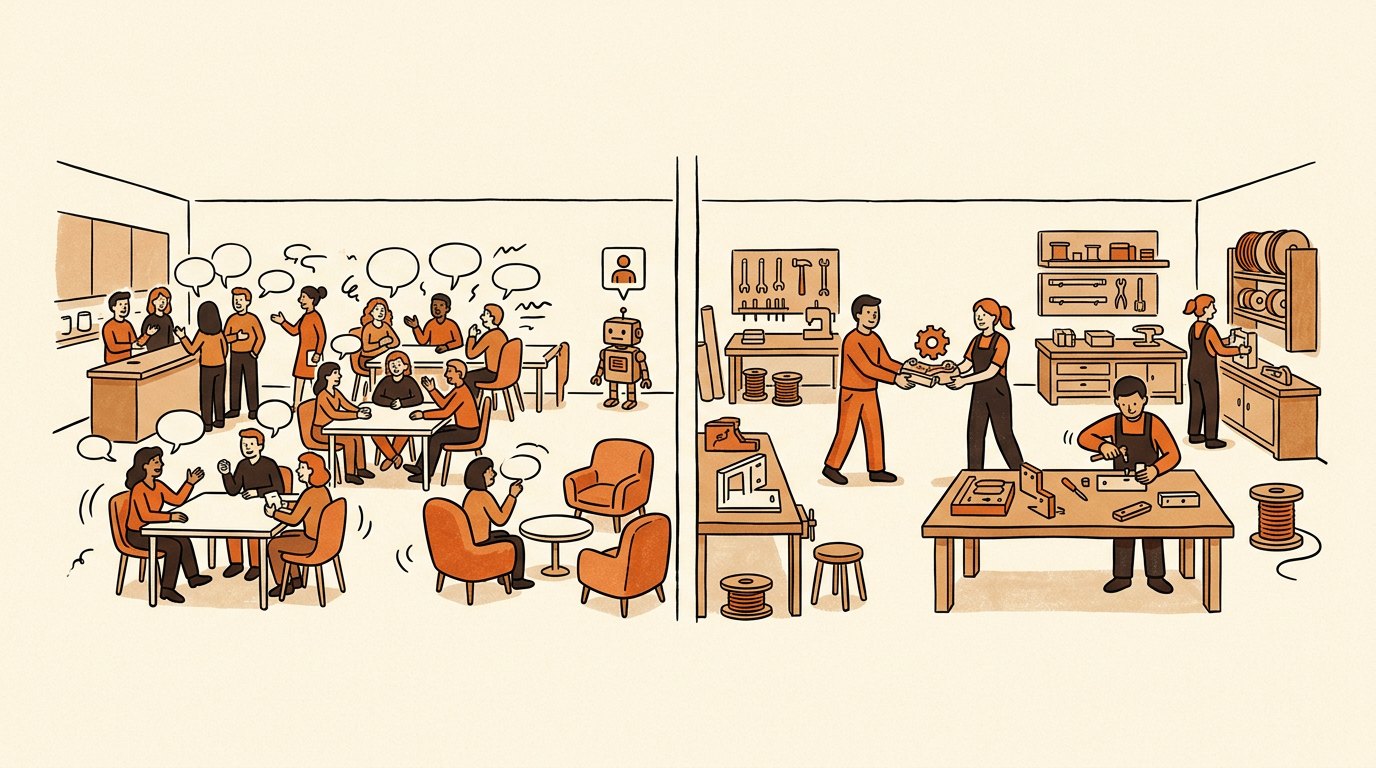
- Slack was built for people to talk; Buzz for people and agents to work. That origin is the whole difference.
- On Slack a bot is a guest; on Buzz an agent is a member with its own keys, its own channels, and its own audit trail, and it hands off work.
- Slack scales conversation. Buzz scales output. For a solo operator, output is the game.
- An agent carries a task start to finish, where a bot only posts, reminds, and waits to be told.
- Slack's added AI speeds up chatting; an agent platform removes the human from the middle of every step.
- Slack is still right if your team is mostly people who talk and AI is a minor helper.
- Buzz is early: made by Block, launched July 21, 2026, open source under Apache 2.0, and still a beta as of early August 2026.
- Start small: give 1 draining, judgment-free job to 1 agent, keep everything else where it is.
The Solo Creators AI Studio
Get this skill, and every one I build.
The whole vaultA new drop monthlyBuild live with meYours to keep, forever
See inside the AI Studio
30-day money-back guarantee. Cancel anytime.
Questions people ask
Is Buzz just Slack with AI bots?
No. On Slack a bot is a guest that reacts and posts on command. On Buzz an agent is a member with its own keys and its own audit trail: it owns a job, does the work, and hands off to other agents. Buzz was designed around agents from day 1; Slack attaches bots to a chat app.
Slack has AI features now, so why switch?
Slack's AI makes chatting faster with search and summaries, which helps people talk. It doesn't give you an agent that owns a job. If your bottleneck is that everything waits on you, an agent platform fixes that; faster chat doesn't.
Do I have to leave Slack to use Buzz?
No. Keep Slack for your human team and start Buzz with a single agent owning a single job, like repeat customer questions or weekly research. If that agent carries real weight, add a second. Nothing forces a migration.
What kinds of jobs can a Buzz agent own?
Answering repeat customer questions in your voice, researching a topic and reporting back, turning an idea into a week of content drafts, running on a schedule through Buzz's YAML workflows, and handing work to another agent. A bot posts and reminds; an agent does these end to end.
Is Buzz good for a team of humans?
It can carry conversation, but that's not where it wins. If your team is mostly people who need to talk and AI is a minor helper, Slack is the mature, familiar choice. Buzz earns the move when your team is mostly agents doing real jobs.
How is an agent different from a Slack workflow or Zapier?
A workflow or automation runs fixed steps and breaks when the input changes. An agent understands the job, adapts, works in your voice, and hands off when it's done. You brief it like a teammate instead of configuring it like a script.
How do I start on Buzz without it being a big project?
Pick the 1 task that most drains you and doesn't need your judgment, and give that single job to 1 agent. Keep everything else where it is. Buzz is an early beta as of early August 2026, so a single low-stakes job is exactly the right size to start.
Will I still be in control if agents do the work?
Yes, if you run the draft-and-approve pattern: the agent does the whole job and hands the result back before anything goes out. In Buzz's own README, an approval is a human thumbs-up reaction gating a workflow step, and richer approval gates are still being wired in as of early August 2026.

Written by Ronnie Nijmeh
Ronnie spent 18 years building a SaaS with a team of 20 that served over 650,000 customers, generated over $14M in sales, and sent over 550M emails. Now he's solo, solving real business bottlenecks and turning them into working AI skills, workflows, and automations. He teaches all of it, with direct access to him, inside the Solo Creators AI Studio Skool community. See what he's built →
“I completely rebuilt my site using the Website Launch Builder. If you've ever built a website, you'll really appreciate this skill. I'm blessed to be a member.”
 Michael HattawayFounder, Iron Strengthens Iron